
Eric Arthur "George" BLAIR "ORWELL"
Biography
George Orwell, whose real name was Eric Arthur Blair, was a British writer born on June 25, 1903, in Motihari, British India (present-day Bihar, India). He's best known for his impactful novels "Animal Farm" and "Nineteen Eighty-Four," which have become classics of dystopian literature.
Orwell's early life was marked by his family's colonial background. His father, Richard Blair, worked in the Opium Department of the Indian Civil Service. At the age of one, Orwell moved with his mother, Ida Blair, and his older sister, Marjorie, to England, while his father stayed in India. This separation from his father and the experience of being sent off to a boarding school at a young age would later influence Orwell's views on authority and power.
Orwell attended several schools, including St Cyprian's, where he faced the harsh discipline that he would later criticize in his works. After completing his education, he joined the Indian Imperial Police in Burma (present-day Myanmar) in 1922. However, his experiences working for the imperial system, witnessing poverty and oppression, led him to question the morality of British rule. This period laid the groundwork for Orwell's later anti-imperialist and anti-authoritarian stance.
In 1928, Orwell decided to resign from the police force and returned to England. He chose a life of poverty and embarked on a journey to become a writer. Orwell lived among the destitute in London and Paris, chronicling his experiences in the autobiographical work "Down and Out in Paris and London."
During the Spanish Civil War (1936-1939), Orwell joined a leftist militia to fight against Francisco Franco's fascist forces. His experiences on the front lines and the political infighting among the leftists disillusioned him with some aspects of communism, an ideology he had previously supported. This disillusionment is reflected in his later works, particularly in "Animal Farm."
Orwell's writing career gained momentum in the 1930s with the publication of works such as "The Road to Wigan Pier," an exploration of the living conditions of the working class in northern England. However, it was his dystopian novels that brought him widespread acclaim and cemented his place in literary history.
"Animal Farm," published in 1945, is an allegorical novella that satirizes the events leading up to the Russian Revolution of 1917 and the early years of the Soviet Union. Through the use of farm animals as characters, Orwell critiques the corruption and betrayal of the socialist ideals he once believed in.
In 1949, Orwell published "Nineteen Eighty-Four," a chilling portrayal of a totalitarian regime where the government, led by the figure known as Big Brother, controls every aspect of citizens' lives. The novel introduced concepts like Newspeak, thoughtcrime, and doublethink, which have since become part of the cultural lexicon.
Tragically, George Orwell's health began to decline around the time he was completing "Nineteen Eighty-Four." He was diagnosed with tuberculosis, a disease that had already claimed his wife, Eileen O'Shaughnessy, in 1945. Orwell passed away on January 21, 1950, at the age of 46.
Despite his relatively short life, George Orwell left a lasting legacy through his writings, which continue to be studied and admired for their exploration of political and social issues. His work has influenced countless writers and thinkers, and the terms and phrases he coined, such as "Big Brother" and "Orwellian," remain powerful symbols of governmental overreach and the dangers of unchecked authority.
Learn more about the life of

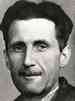 Eric Arthur "George" BLAIR "ORWELL".