
César Estrada (Césario) CHÁVEZ
Biography
Born on March 31, 1927, in Yuma, Arizona, Cesar Estrada Chavez became a prominent American labor leader and civil rights activist. He is best known for co-founding the National Farm Workers Association (NFWA), which later became the United Farm Workers (UFW).
Cesar Chavez grew up in a Mexican-American family of migrant farmworkers, facing the challenges and hardships of agricultural labor from a young age. His family lost their farm during the Great Depression, and they became migrant workers, traveling from place to place in search of employment.
Chavez attended more than 30 different schools as his family moved around, and he had to work in the fields to contribute to the family income. This early experience deeply influenced his perspective on the rights and conditions of agricultural workers. Chavez left school after the eighth grade to work full-time in the fields.
In the 1940s, Chavez joined the United States Navy, serving in the Western Pacific for two years. After his military service, he returned to California and married Helen Fabela in 1948. The couple eventually had eight children.
Chavez became involved in community organizing and social justice causes in the 1950s. He worked for the Community Service Organization (CSO), a Latino civil rights group, where he honed his skills in grassroots organizing and advocacy. During this time, he collaborated with Dolores Huerta, who would become a lifelong partner in his activism.
In 1962, Chavez and Huerta co-founded the National Farm Workers Association (NFWA) to address the injustices faced by farmworkers, including low wages, poor working conditions, and the lack of job security. Chavez was influenced by nonviolent activism, particularly the philosophy of Mahatma Gandhi. The NFWA later merged with the Agricultural Workers Organizing Committee (AWOC) to form the United Farm Workers (UFW) in 1966.
One of Chavez's most significant contributions to the labor movement was his advocacy for nonviolent protest and civil disobedience. He led the famous Delano grape strike in 1965, where farmworkers protested against unfair labor practices and poor working conditions in the grape fields. The strike lasted for five years and garnered national attention, eventually leading to a successful boycott of table grapes.
In 1968, Chavez embarked on a 25-day fast to protest the use of pesticides in the fields, bringing further attention to the health risks faced by farmworkers. His commitment to nonviolence and his willingness to make personal sacrifices for the cause earned him respect and admiration.
Chavez continued to fight for farmworkers' rights throughout the 1970s and 1980s, expanding the UFW's efforts to include campaigns for better wages, housing, and access to clean water. His work also focused on promoting the rights of undocumented immigrants and empowering Latino communities.
Cesar Chavez's legacy extends beyond his contributions to the labor movement. He became an iconic figure in the broader struggle for civil rights, advocating for social justice and equality. His efforts paved the way for improvements in the conditions of agricultural workers and inspired future generations of activists.
Chavez received numerous awards and honors during his lifetime, including the Presidential Medal of Freedom in 1994. He passed away on April 23, 1993, in San Luis, Arizona, but his impact continues to be felt today. Cesar Chavez Day, observed on March 31st, is a state holiday in several U.S. states, honoring his contributions to workers' rights and social justice.
Learn more about the life of

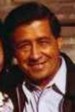 César Estrada (Césario) CHÁVEZ.