
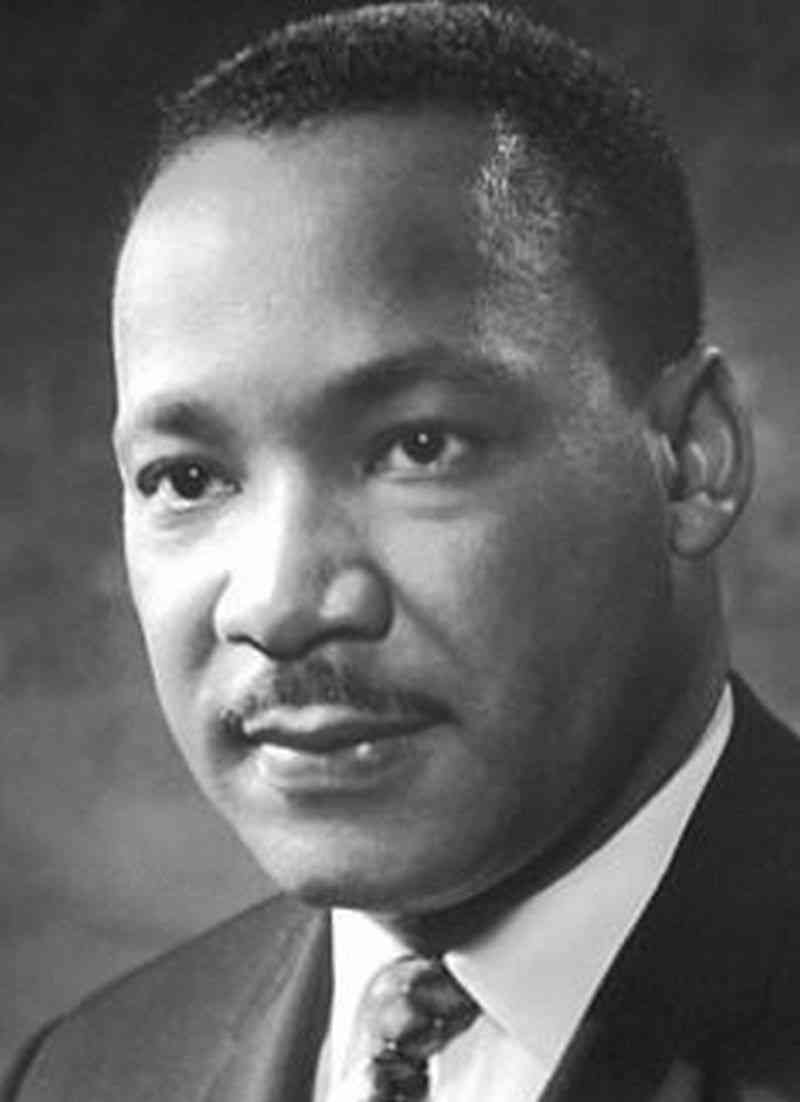
Martin Luther, Jr. KING
Biography
Martin Luther King, Jr. was a pivotal figure in the American civil rights movement during the 1950s and 1960s. Born on January 15, 1929, in Atlanta, Georgia, he was the son of Martin Luther King Sr., a Baptist minister, and Alberta Williams King. King grew up in a supportive and religious household, where the values of equality and justice were instilled in him from an early age.
King's journey as a civil rights leader began during the Montgomery Bus Boycott in 1955. This protest was sparked by the arrest of Rosa Parks, an African American woman who refused to give up her seat to a white person on a segregated bus. The boycott, which lasted for 381 days, marked the first large-scale demonstration against segregation in the United States. King emerged as a leader during this time, advocating for nonviolent resistance inspired by Mahatma Gandhi's philosophy.
In 1957, King, along with other civil rights leaders, founded the Southern Christian Leadership Conference (SCLC) to coordinate and support nonviolent direct action to achieve civil rights reform. King's commitment to nonviolence became a cornerstone of his activism. He believed that love and peaceful protest could bring about social change and justice.
One of the most iconic moments in King's life and the civil rights movement was the March on Washington for Jobs and Freedom in 1963. On August 28, 1963, King delivered his famous "I Have a Dream" speech in front of the Lincoln Memorial, where he passionately spoke about his vision of a racially integrated and harmonious America. The march and King's speech played a significant role in influencing public opinion and eventually led to the passage of the Civil Rights Act of 1964 and the Voting Rights Act of 1965.
Despite his commitment to nonviolence, King faced significant opposition and hostility. He was arrested numerous times for his participation in civil rights activities, and his home was bombed in 1956 during the Montgomery Bus Boycott. King's leadership and activism earned him the Nobel Peace Prize in 1964, making him the youngest recipient at the time.
King's focus expanded beyond racial segregation to economic injustice and the Vietnam War. He spoke out against the war, viewing it as a diversion of resources from domestic social programs. His opposition to the war led to strained relationships with some civil rights allies and political leaders.
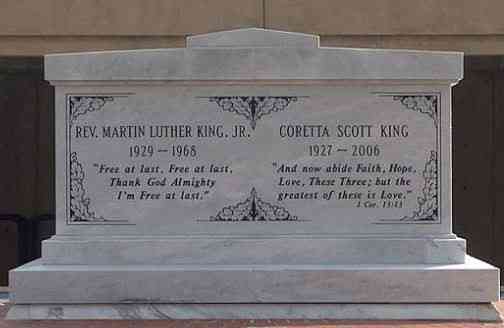
Tragically, Martin Luther King, Jr. was assassinated on April 4, 1968, in Memphis, Tennessee. His death marked a significant loss for the civil rights movement and the nation as a whole. However, King's legacy endures. His life and work continue to inspire people around the world, and his contributions to the advancement of civil rights and equality are celebrated annually on Martin Luther King Jr. Day, a federal holiday in the United States.


Learn more about the life of

 Martin Luther, Jr. KING.
Visit Atlanta, Georgia, USA
Discover the people who lived there, the places they visited and the stories they shared.